Ready to begin your studio journey?
Launch your studio with a free trial of OfferingTree and start your journey off right. Build your website, offer classes, take payments, and so much more!
This article was written by Brittany Woitas, founder from Kōvly Studio, a brand + marketing agency for wellness brands.
There’s a quiet paradox happening in the wellness industry right now.
The global health and wellness market reached a record $6.8 trillion in 2024 and is projected to approach $10 trillion by 2029. 84% of US consumers rank wellness as a top or important priority in their daily lives. Memberships are climbing, spending is up, and by every measurable metric, people care more about their well-being than ever before.
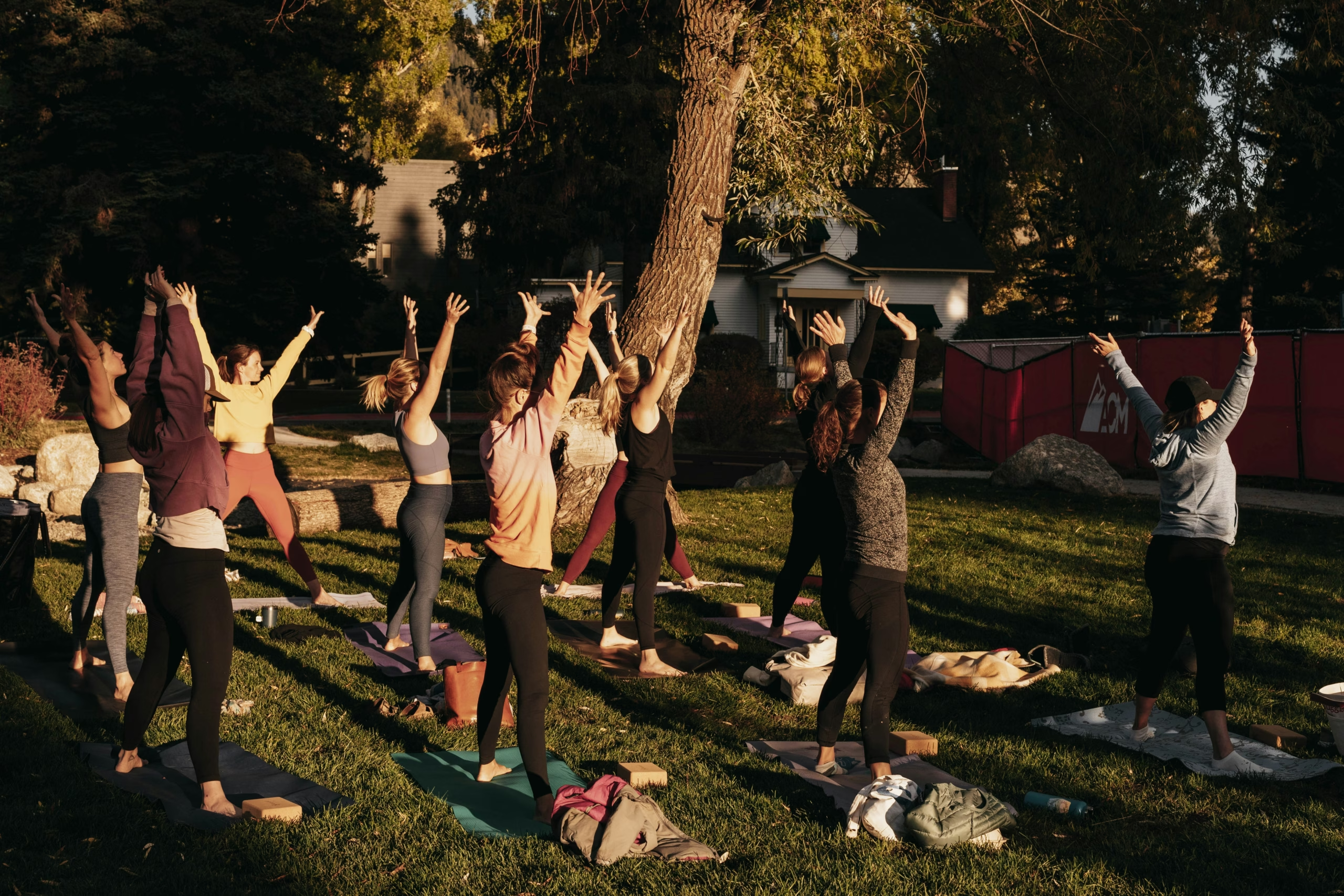
And yet, more people are practicing alone than at any point in recent memory.
They’re following along with YouTube videos in their living rooms. They’re tapping through guided meditations on apps they haven’t opened in three weeks. They’re doing the movements, going through the routines and quietly wondering why it doesn’t feel as good as it used to.

As it turned out, solo wellness turned out to have a ceiling… and a lot of people hit it at the same time.
For yoga and Pilates studio owners, this shift is one of the most significant opportunities of the decade ( if you know how to read it).
The post-digital fatigue your members aren’t telling you about
The pandemic forced an experiment nobody asked for: take every wellness practice that had ever been done in community, strip out the community, and see what happens.
What happened was predictable in hindsight. Meditation apps saw a surge in downloads followed by a slow, steady decline in daily active users. Virtual fitness classes maxed out their novelty within months. Screen fatigue–the kind that comes from spending eight hours on video calls for work and then being asked to do your yoga class the same way–became a real phenomenon.
According to our research at Kōvly Studio, the data tells a clear story. Consumers report declining engagement with app-based wellness solutions, a craving for in-person human interaction, and a recognition that accountability works significantly better when other people are involved. Post-digital fatigue isn’t just a buzzword. It is a measurable behavioral shift that’s reshaping how people choose where to spend their wellness dollars.
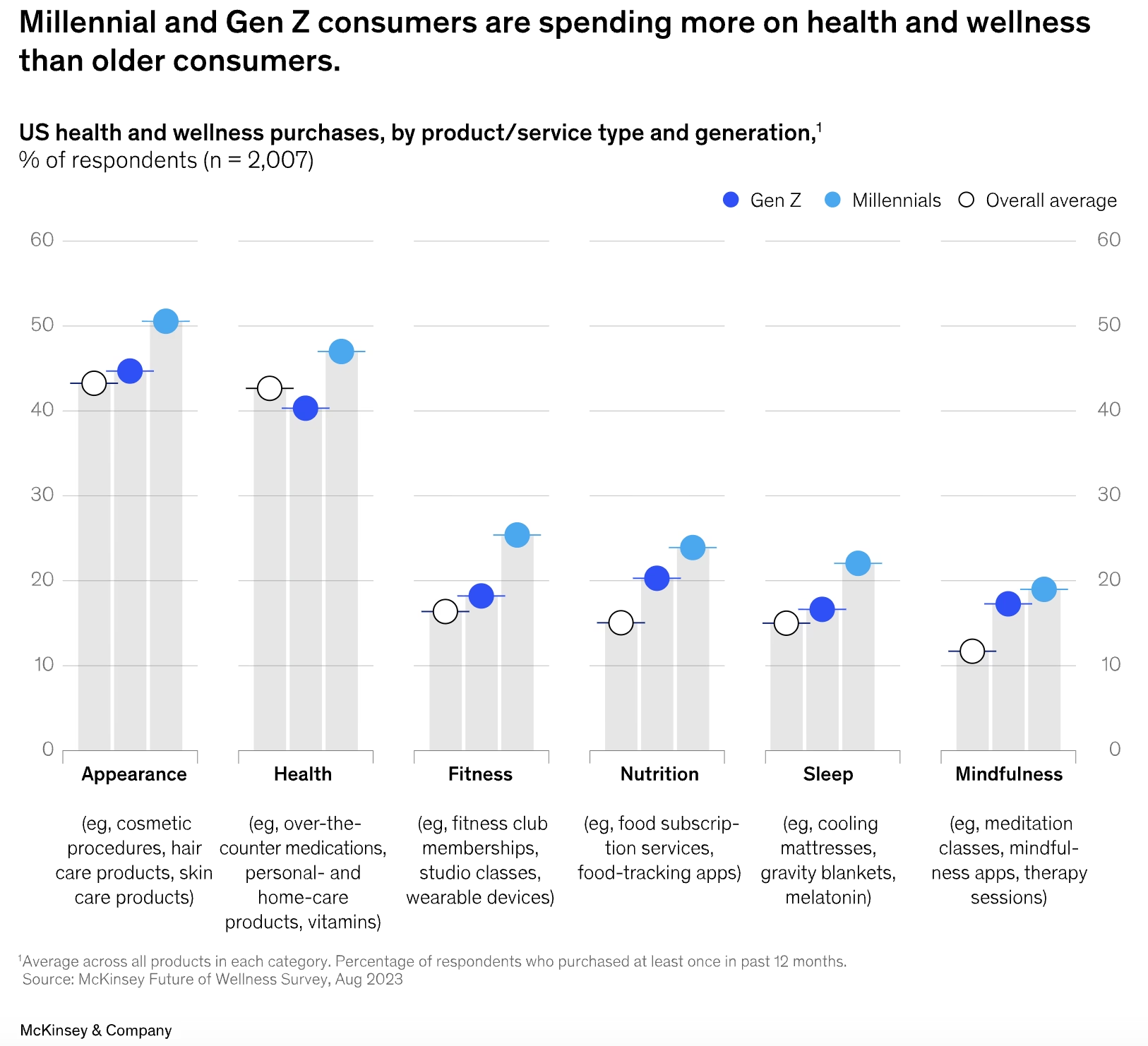
The consumers driving this shift are primarily Gen Z and Millennials, who now account for 41% of total wellness spending despite representing only 36% of the population. This generation grew up online, which means they understand better than anyone that digital connection has its limits. They’re not abandoning technology, instead they’re becoming more selective about when it serves them and when it doesn’t.
For studio owners, the implications are significant: the people most likely to become your best members are actively looking for something that screens can’t give them. They want to sweat next to someone. They want a teacher who knows their name. They want to feel like they belong somewhere.
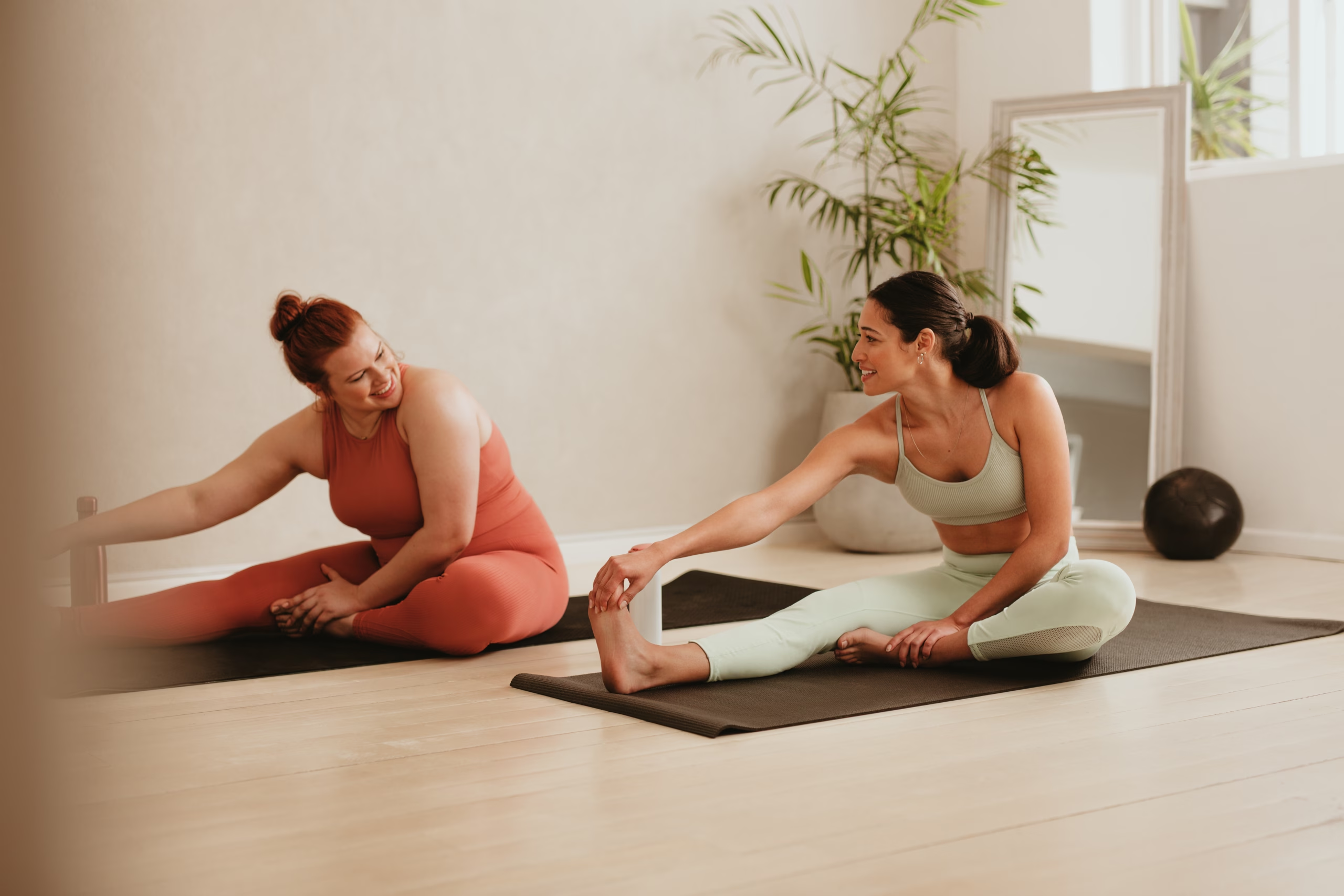
That’s a human need, not just a wellness trend. And studios are uniquely positioned to meet it.
Why community is a marketing strategy, not just a nice-to-have
Here’s where a lot of studio owners get stuck. They understand that community matters. They feel it in the studio every day–the regulars who show up early to chat, the members who text each other when someone’s been absent, the instructor who remembers that a student had a hard week.
What they often don’t see is how that community is doing marketing work on their behalf every single day.
Let’s be specific about what community-driven studios actually experience differently:
Lower acquisition costs. When your members recruit members (and they will, because belonging to something worth belonging to is something people talk about) your cost to acquire a new client drops dramatically. Word-of-mouth from a genuinely connected community is more effective than any paid campaign, and the members who refer most enthusiastically are usually the same ones who’d write you a glowing review. Capturing that social proof is one of the lowest-effort, highest-return marketing moves a studio can make.
Higher retention rates. Members who attend group fitness classes keep their memberships 22% longer than those who practice solo. But the effect goes deeper than just showing up to class. Members who feel genuinely connected to a studio community have a much higher switching cost. Leaving to them isn’t just canceling a membership, it’s leaving a community. If you’ve ever looked at your numbers and wondered why strong members quietly disappear around the six-month mark, this is worth reading.
Premium pricing power. Belonging has value beyond the service itself. A yoga class at a studio where you know the teacher, where other members know your name, and where you feel like you’re part of something is worth more than the identical class delivered by a stranger. Studios that build genuine community can and should price accordingly.
Richer insight into what members actually need. Community conversations that happen before class, in the group chat, and at the member event reveal unmet needs that no survey could capture. Studios with strong community know what their members are struggling with, what they’re asking for, and where there are gaps, because their members tell them.
Our research shows that community-centric wellness brands consistently outperform their competitors across every key metric: retention, referrals, acquisition costs, and marketing effectiveness. The studios that understand this have built their community into how they operate, the same way they’d think about their schedule or their pricing.
What community looks like for a yoga or pilates studio
The word “community” gets used so often in wellness marketing that it’s started to lose its meaning. Every studio says they have one. So what actually separates the studios where community is real from the ones where it’s a word on the website?
It comes down to five specific things that successful studios build intentionally.
Shared accountability
The most powerful thing about practicing with other people isn’t the instruction, it’s the fact that other people are there. Group challenges, partner progressions, and team-based initiatives leverage something deeply human: we show up differently when we know someone else is counting on us.
For studio owners, this means designing experiences that create accountability between members, not just between members and the studio. Consider challenges that pair people together, milestone celebrations that happen in front of the group, or class formats where members naturally encourage each other. The goal is for members to feel accountable to each other, not just to their membership fee.
Belonging beyond the transaction
The studios with the strongest communities have members who identify with the studio, not just members who purchase classes there. They wear the merch. They tell their friends not that they “go to yoga” but that they “go to [your studio name].” They feel like insiders.

Source: solidcore
This kind of belonging doesn’t happen by accident. It requires intentional culture-building: a clear point of view about what the studio stands for, rituals that are unique to your space, language and inside references that signal membership in something specific. It requires knowing your positioning deeply enough to attract the right people and repel the wrong ones .
Peer support networks
The most underutilized asset most studios have is the relationship between their members. Studios that facilitate these connections through member events, online groups, partner check-ins, or simply creating space before and after class for conversation build something that no app can replicate: real human relationships formed around shared experience.
These connections create switching costs that go far beyond the quality of the classes themselves. A member who has made friends at your studio isn’t just evaluating whether your classes are worth the monthly fee. They’re evaluating whether they’re willing to give up those friendships. That’s a very different decision.
Shared experiences
Classes are the foundation, but experiences are what become memories. Workshops, retreats, member appreciation events, community challenges, and seasonal gatherings are the moments that deepen the relationship between members and the studio, and between members and each other, in ways that weekly class attendance simply can’t replicate. Bundling event access into your membership tiers is one way to make those experiences feel exclusive to the people who’ve committed to your community.
Studios that invest in shared experiences aren’t just creating goodwill, they’re creating stories. Stories that people share with their friends.
Owned community over platform dependence
One of the most strategic decisions a studio can make in 2026 is building community in spaces they own rather than spaces they rent. An Instagram following is not a community. A platform can easily deprioritize you, bury your posts, or cut you off entirely with a single algorithm update. . An email list, a private member group, or a text community are all assets that belong to the studio. Building that list intentionally is one of the most practical things a studio can do in 2026.
Studios that build owned communities have a direct line to their most engaged members that doesn’t depend on a platform deciding to show them content. In an environment where organic reach continues to decline and paid reach continues to get more expensive, that’s not just a nice-to-have, it’s a competitive advantage.
How to build community intentionally (without overhauling everything)
The good news is that building community doesn’t require a complete reimagining of how you run your studio. The foundation is almost certainly already there, you just need to be more deliberate about cultivating it.
Here’s where to start.
Start before class, not during it. The five minutes before class starts are some of the highest value community-building time in your week, and most studios waste them. An instructor who arrives early, learns names, and makes introductions is doing more for retention than almost any other investment. Create space for connection to happen (and then get out of the way).
Name your community explicitly. What do you call the people who practice at your studio? If the answer is “our members” or “our clients,” you’re missing an opportunity. Communities often have names. Identities. A sense of belonging to something specific. Think about what your studio stands for and what you’d call the people who embody that, then use that language consistently.
Create rituals. Rituals are the scaffolding of culture. They can be small: a particular way you open every class, a monthly challenge that the whole studio participates in, a tradition around welcoming new members. The specifics matter less than the consistency. Rituals signal that this is a place with a culture, not just a service provider.
Celebrate your members publicly. Progress, milestones, comebacks, first classes, and hundredth classes are all moments worth marking. Studios that celebrate their members publicly (with permission) create a culture where people feel seen and valued. They also create content that shows prospective members what the community is like from the inside.
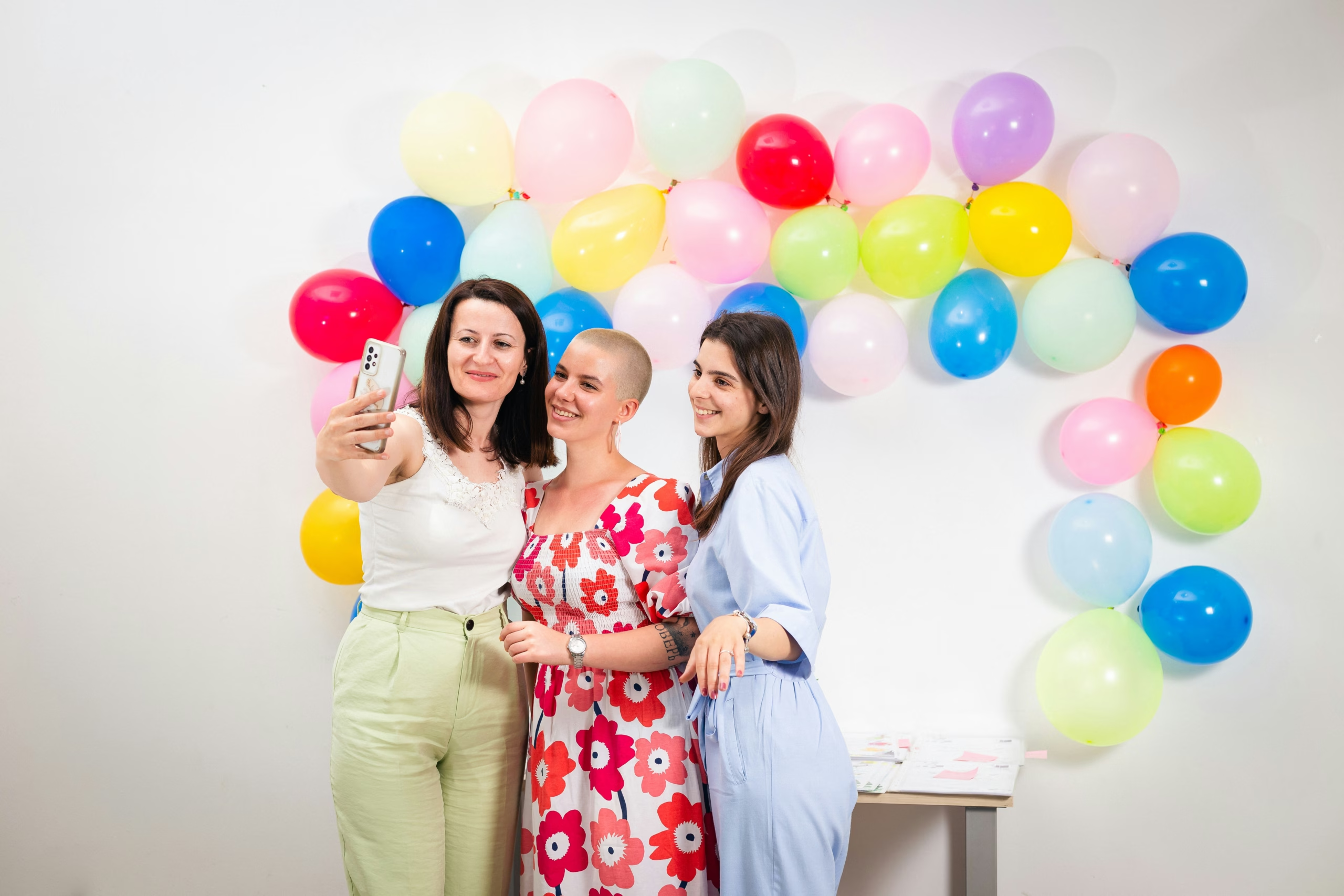
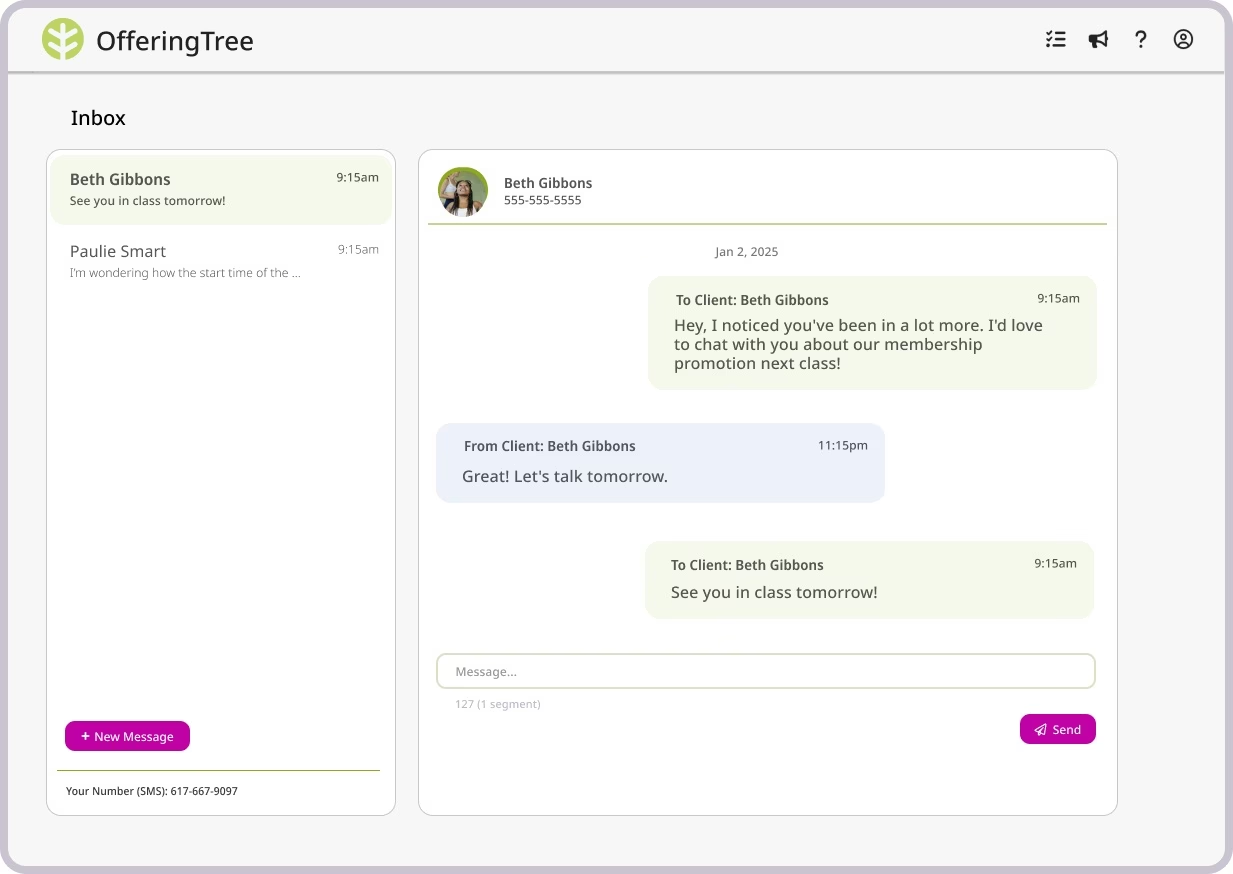
Build a communication rhythm that goes beyond scheduling. Studios with the strongest communities communicate with their members consistently and personally, not just when there’s something to sell. Think about newsletters, member spotlights, behind the scenes content, or instructor introductions. The goal is to maintain the relationship between visits, not just to fill classes. Getting the structure and cadence right matters more than how often you send.
Ask for feedback and act on it visibly. Nothing signals that you’re building a community rather than running a business like actually listening to what your members tell you and making changes based on it then telling them you did. “We heard you asking for earlier classes, so we added a 6am Thursday session” is a community-building statement. It shows members that their voice shapes the studio.
The bigger picture
There’s a reason the post-digital fatigue phenomenon matters so much for studio owners specifically.
Apps and platforms spent years trying to replicate what happens in a great yoga or Pilates class: the instruction, the accountability, the sense of being guided through something challenging. Some of them got surprisingly good at the instruction part. None of them figured out the community part.
That’s not a technology problem. It’s a human problem. The thing that makes a great studio irreplaceable isn’t just the quality of the teaching (though that matters enormously). It’s the relationships that form in the space. The instructor who remembers that you had a hard week. The classmate who texts you when you haven’t been in a while. The sense that this is your studio, your people, your community.
Those things can’t be streamed or downloaded. They can only be built.
The studios that understand this are the ones that will thrive regardless of what the apps do next, regardless of how the algorithms change, regardless of how many new competitors open down the street. Because they’ve built something that genuinely can’t be replicated.
That’s not just a wellness strategy. It’s the oldest marketing strategy there is: give people something worth belonging to, and they’ll never want to leave.
Want to go deeper on the trends shaping wellness marketing in 2026? Download the Kōvly Studio 2026 Health + Wellness Marketing Report — a free, research-backed resource covering consumer behavior, strategic positioning, and the marketing approaches that are actually moving the needle for wellness businesses right now.
ABOUT KŌVLY STUDIO
Kōvly Studio is a boutique brand and marketing agency for independently owned wellness businesses. Strategy-first, end-to-end, and built for brands that refuse to blend in. Learn more at kovlystudio.com.