

CONTENTS
- Registered Series vs. Drop-In Classes: A Comparison
- What is a Registered Series?
- The Simple Marketing Framework That Works
- Real World Examples That Crushed It
- The Nurture Sequence That Converts
- Common Challenges and How to Handle Them
- Action Steps to Get Started
- The Long-Term Vision
- Frequently Asked Questions
This article is based on insights from Michael Jay, the Yoga Biz Champ, shared in a recent OfferingTree webinar on how to design a registered series for your studio. Michael Jay is a a business coach for yoga studios and host of Yoga Biz Champ Podcast. Find Michael Jay on Instagram here.
Building a thriving wellness or yoga business requires more than exceptional teaching. It demands sustainable revenue streams that don’t depend on unpredictable drop-in attendance. Registered series offer yoga studio recurring revenue that transforms how studios generate income while building lasting community connections.
In a wellness economy now valued at $6.3 trillion and projected to reach $9 trillion by 2028 according to the Global Wellness Institute, wellness and yoga business owners who implement course-based programs position themselves for long-term growth and financial stability. This comprehensive guide reveals how to create, market, and scale registered series that fill quickly and convert participants into loyal, long-term clients.
Registered Series vs. Drop-In Classes: A Revenue Comparison
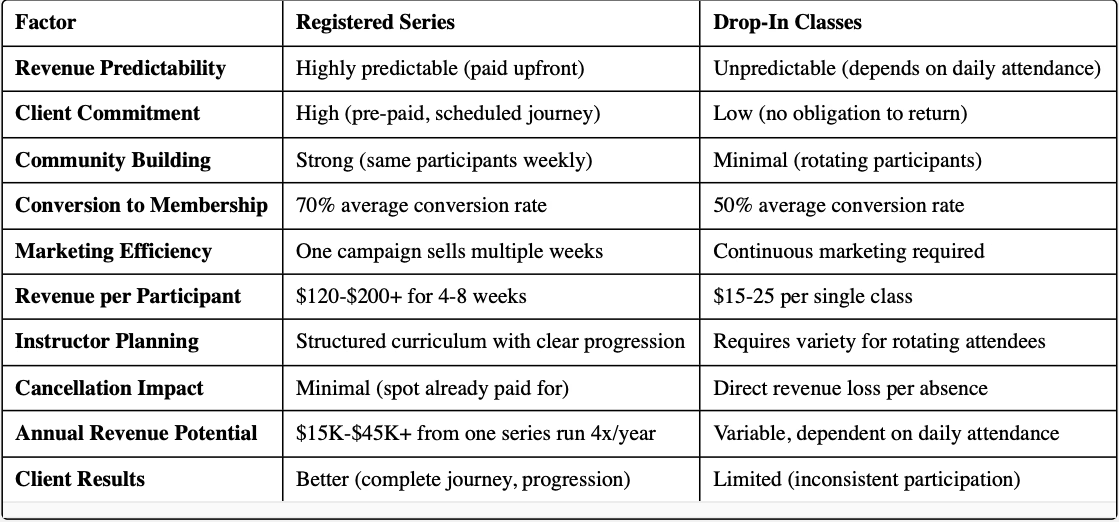
For small wellness or yoga businesses where 61% of revenue comes from repeat customers, registered series create the predictable yoga studio recurring revenue and client retention needed for sustainable growth.
What Is a Registered Series?
A registered series is a program-based revenue stream with a clear beginning and end where participants pay upfront and commit to a journey together. Unlike drop-in classes or month-to-month memberships where attendance fluctuates, registered series create stability, community, and yoga studio recurring revenue.
“It’s different than a drop-in membership-based model where there’s instability of whether people come or not,” Michael explains. “When you create something that is registered, which is pay upfront, you can create a journey from beginning to end.”
Former studio owner Michael Jay shared his proven framework for creating registered series that not only fill quickly but also convert participants into long-term clients. With 24 years as a yoga teacher and 13 years running his own successful studio, Michael knows what it takes to build programs that work.
The best part? Registered series aren’t just for yoga studio owners. Whether you’re renting space, teaching virtually, or running programs from a community center, this model can transform your wellness business.
Why Registered Series Create Recurring Revenue for Yoga Studios
Predictable Yoga Studio Recurring Revenue and Financial Stability
Let’s talk numbers. Michael shared data from a real studio with 24 spaces running one beginner series at $159:
- One program: $3,816 in revenue
- Four programs per year: $15,264 in additional annual revenue
- Three concurrent series: $45,792 in additional annual revenue
These aren’t hypothetical numbers. They’re from actual studios. This is real recurring revenue for yoga studios without the instability of hoping people show up for drop-in classes.
“The blue spikes are the times of taking money for a registered series,” Michael explains while showing revenue graphs. “If you ran that one program four times a year, that’s an extra $15,000 plus revenue.”
Higher Conversion Rates
While a good conversion rate for intro offers typically sits around 50%, Michael’s clients consistently see 70% conversion rates from their registered series into ongoing memberships.
Why? Because registered series create the time and space to build relationships, demonstrate value, and guide participants through a transformation.
Community and Connection
When the same group of people shows up week after week, something magical happens. Intimidation factors disappear. Support systems form. Participants feel accountable not just to you, but to each other.
“It’s the same people every week,” Michael notes. “It’s less intimidating. It’s the same faces every week, so it makes people feel at ease.”
Repeatable and Scalable
Once you’ve created one successful registered series, you’ve built a template you can use again and again. The landing page, marketing materials, email sequences, graphics: everything can be duplicated. This is how studios build yoga studio recurring revenue that compounds year over year.
The Simple Marketing Framework That Works
Michael keeps marketing refreshingly simple with a framework that works for any wellness offering, not just yoga studios:
- Who is your program for? Define your ideal participant with specificity.
- What problem are they facing? Identify the pain points, frustrations, or challenges they’re experiencing.
- What’s your solution? This is where your unique gifts become your superpower. What transformation can you offer?
- Where are they hanging out? “Where are their eyeballs?” Michael asks. Are they on Instagram? Facebook groups? Local coffee shops? Reddit communities?
- How can you market to them? Get scrappy. Find creative, low-cost ways to get in front of those eyeballs.
This framework applies whether you’re teaching yoga, Pilates, meditation, mobility work, or any other wellness modality.
Real-World Examples That Crushed It
Beginner 101: The Foundation
Michael’s most successful registered series was his beginner 101 program. He recommends every yoga business consider offering one.
- Who it’s for: People who have never tried your modality before
- Problem: Intimidation, not knowing where to start, feeling stiff or stressed
- Solution: A supportive journey that builds confidence and foundational skills
- Marketing: Local posters with QR codes, partnerships with neighboring businesses, targeted Facebook ads
“At the end of this course, you feel comfortable to go to any class on my schedule and choose the class right for you,” Michael explains of his approach.
The genius of a beginner series is that it removes the biggest barrier to entry while creating a natural pathway to your other offerings while helping you build your yoga studio recurring revenue.
Yoga for Men
Michael identified a clear demographic need and tailored his beginner program specifically for men.
- Who it’s for: Men (particularly in a heavily populated gay neighborhood in Vancouver)
- Problem: Tight hamstrings, hips, low backs, weak core
- Solution: A male teacher who could relate to living in a tight body
- Marketing: Location-based Facebook ads targeting men within specific age ranges in a one-mile radius, plus QR code posters around downtown
“Every time I did that program, I filled it out,” Michael shares. The key was hyper-targeted marketing that spoke directly to his ideal participant.
Relax Series: Meeting People Where They Are
During COVID, Michael created a series for stressed-out parents specifically timed at 7:15 PM, after kids were in bed.
- Who it’s for: Stressed-out moms needing self-care time
- Problem: No time for themselves, high stress levels
- Solution: Evening relaxation sessions when they could actually attend
- Marketing: Facebook groups where his ideal participants were already gathering
This series became one of his most successful and repeatable offerings because it solved a real problem with a perfectly timed solution.
Reboot: Community-Driven Daily Practice
One of Michael’s most innovative series came from personal need. During a difficult period in COVID, he created “Reboot.” This program met Monday through Friday for 30 minutes of meditation and gentle stretching, with guest experts (naturopaths, counselors, hypnotherapists) on weekends.
“I was going through COVID and thinking, how am I gonna come through to Christmas? If I was in that place, others must be too. So I created a series for myself,” Michael explains.
The takeaway? Your own struggles and needs often reveal exactly what your community needs too.
Thrive: Finding Your Niche Community
Michael’s client Annette had a background in substance abuse recovery and was a massive fan of the band Phish. She discovered a large Facebook group called “Phish Chicks” and simply asked if there would be interest in a program combining yoga with recovery support.
The response was overwhelming. She sold out her series by individually messaging interested people and directing them to her landing page. One targeted question in the right community created a sold-out, repeatable program.
The Landing Page That Converts
Michael is adamant: every registered series needs its own dedicated landing page with the clear purpose of getting people to click the registration button.
Essential Elements
- Clear headline that speaks to your ideal participant
- Visual proof (happy students, your welcoming space)
- Multiple calls-to-action (Register now, Sign up today, Grab your spot)
- Benefits clearly listed (what they’ll gain)
- Teacher introduction (connection and credibility)
- Testimonials (social proof)
- Class details (when, where, how much)
- FAQ dropdown (address common concerns)
The Yoga Strong Example
Michael highlighted Samantha from Yoga Strong as the gold standard for registered series marketing. Her approach included:
- Targeted Facebook ad: “Attention Greenville women 40+: Finally, a class for women over 40 who have never done yoga. 10 spots available. Sign up today.”
- Comprehensive landing page with photos of the actual studio space (reducing intimidation), clear benefits, teacher bio, and multiple registration buttons
- Scarcity messaging that created genuine urgency
The result? Her series “keeps killing it even in the summer,” providing consistent yoga studio recurring revenue.
If you’re using OfferingTree’s platform, you have access to a built-in website builder that makes creating these dedicated landing pages straightforward, even if you’re not tech-savvy.
Smart Marketing Tactics That Don’t Break the Bank
QR Codes Everywhere
Michael is a huge advocate for QR codes on everything including posters, window displays, business cards, partner locations. They make it effortless for potential clients to learn more without typing URLs or searching.
“I get annoyed now when buildings don’t have QR codes outside of them because it’s just so fast,” he admits.
Location-Based Facebook Ads
Rather than wasting money advertising to everyone, Michael recommends creating a targeted radius around your teaching location and only advertising to your specific demographic within that area.
For his men’s yoga program, he set a one-mile radius and only showed ads to men in specific age ranges. The cost? As little as $5-10 per day. The result? Consistent yoga studio recurring revenue.
Getting Scrappy in Your Community
Before investing in paid ads, start with guerrilla marketing:
- Partner with local businesses (massage therapists, health food stores, coffee shops)
- Put up posters with QR codes in high-traffic areas
- Ask happy clients to share with friends
- Engage in relevant Facebook groups where your ideal clients hang out
Michael used to walk his dog around his village, putting up posters and building relationships with neighboring business owners. “I got scrappy and got in front of their eyeballs.”
Strong Calls-to-Action
This is where most wellness professionals fall short. You’ve created beautiful social media posts and compelling content, but you forget to tell people what to do next.
“A lot of people forget that final piece,” Michael emphasizes. “What do you want them to do? Click to learn more. Grab your space before it fills. Message for details. Join the waitlist. Say what you want them to do.”
Yoga Studio Email Automation Flow That Converts
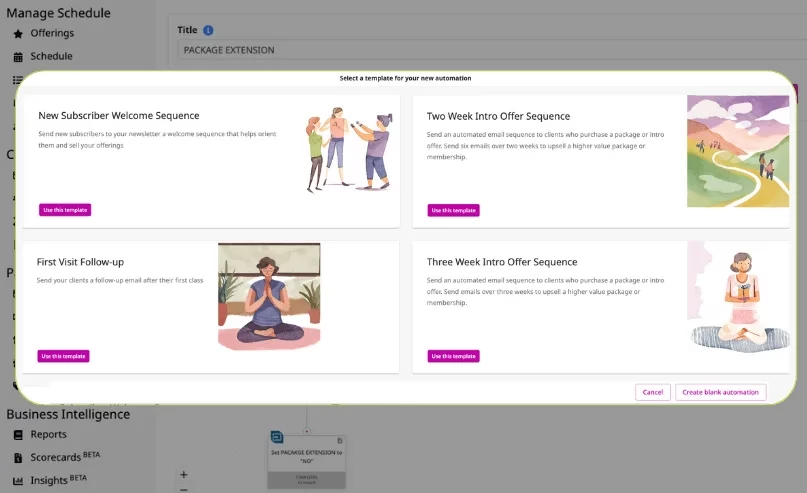
Registered series participants need ongoing support throughout their journey, not just during class time. This is where yoga studio email automation becomes your secret weapon.
Value-Driven Email Sequence
Michael recommends sending automated emails throughout the series that provide value, not just sales pitches:
- After week 1: Short video on proper breathing technique
- After week 4: Handout on sun salutations to practice at home
- After missed class: Gentle reminder and offer to review material before next session
- Near program end: Exclusive offer to continue (not listed on your website)
The formula? Value, value, value, then convert.
With OfferingTree’s SMS and email automation features, you can set these sequences up once and they’ll run automatically every time someone registers. This kind of yoga studio email automation saves hours each week while keeping students engaged.
The Critical Follow-Up Rule
“Try not to let students miss two classes in a row,” Michael warns. “That’s the registered series killer.”
If someone misses a session, reach out immediately: “Hey Samantha, I noticed you missed last night. If you come next week 10 minutes early, the teacher will go over what you missed quickly and you won’t have missed out.”
Two missed classes in a row leads to embarrassment and dropout. One missed class with immediate support keeps them engaged.
Structuring Your Registered Series for Success
How Long Should It Be?
- Four weeks works for focused topics or when you want to fit multiple series into one season.
- Eight weeks allows for deeper transformation and is Michael’s preference for beginner programs.
- Six weeks hits a sweet spot. It is enough time for meaningful change without feeling overly long.
Consider your calendar and local rhythms. Michael avoided summer in his community because it was too variable, but ran strong programs in January-February and September-October when yoga studio recurring revenue is more consistent.
How Often Should You Meet?
- Once per week is the standard that works for most people’s schedules and commitments.
- Twice per week can work for dedicated participants but requires more commitment.
- Three times per week is intensive and harder to fill, but could work for specific challenges or intensive training programs.
Pricing Your Series
This is tricky because costs vary wildly by location and business model. Michael’s guidance:
- Calculate your actual costs: rent, marketing, booking platform, utilities, supplies
- Determine your desired profit: what do you need to earn for this to be worthwhile?
- Research your market: what are comparable offerings priced at in your area?
- Consider your value: what unique expertise or results do you provide?
As a reference point, Michael was charging around $15 per class when he ran his studio, with beginner series around $159 (for roughly 8 classes). But he emphasizes this varies dramatically by location. Teacher costs alone range from $20-25 in some regions to $60-70 in others.
If you’re running a registered series in a studio space, think of yoga mats as real estate. How many participants can you fit? If you have limited space (8 spots), you may need to charge more than someone with room for 20. Yoga studio recurring revenue goals are extremely variable.
Minimum and Maximum Participants
- Set a minimum number to ensure the program is financially viable and has enough energy. Michael suggests at least 5-6 participants.
- Set a maximum based on your space and teaching style. For general classes, this might be 15-20. For older adults or populations needing more attention, consider 10-12.
The key: know your minimum threshold before you start promoting. If you don’t hit it, be prepared to postpone rather than run an unprofitable program.
Common Yoga Studio Recurring Revenue Challenges and How to Handle Them
Cancellation Policy
Michael is clear on this: “Register only, no refunds.”
When someone drops out mid-series, that’s a spot you can’t resell. Your cancellation policy should be stated clearly upfront. You might offer makeup options or credit toward future programs, but refunds undermine the business model.
The “I Can Only Make Half the Classes” Request
This comes up constantly. Someone wants to pay for only 6 of 8 classes, or asks for a prorated rate.
Michael’s advice: hold your boundary. You’ve created a journey, not a drop-in class. The value is in the complete experience. If you start customizing pricing, you’ll spend more time negotiating than teaching.
Slow Sales
If a program isn’t filling, don’t panic. Some options:
- Extend your registration deadline (but create new urgency around it)
- Boost your marketing (allocate one student’s registration fee to advertising)
- Reach out personally to past intro clients or email list members
- Consider postponing rather than running with too few people
Summer Slumps and Holiday Challenges
Be strategic about timing. Some seasons naturally work better for registered series and yoga studio recurring revenue, while others (summer vacations, December holidays) can be challenging.
Michael stopped running registered series in summer in his location, instead focusing on spring and fall. Know your community’s rhythms and plan accordingly.
Setting Up for the Next Round
As soon as registration closes, update your landing page with either “Registration Closed” or “Sold Out” (if applicable), along with the next registration date and booking link.
This serves two purposes:
- Creates FOMO (fear of missing out) for those who delayed
- Captures interest for the next round while enthusiasm is high
Michael’s clients pre-sell the next season two months out using this simple strategy.
Action Steps to Get Started
Ready to create your first registered series and start building yoga studio recurring revenue? Here’s your roadmap:
Week 1: Planning
- Identify your ideal participant using Michael’s framework
- Determine your program length (4, 6, or 8 weeks)
- Set your pricing based on costs and market research
- Choose your start date based on seasonal timing
Week 2: Creation
- Outline your weekly curriculum with clear progression
- Plan your value-add email sequence
- Draft your landing page content
- Create basic marketing graphics
Week 3: Marketing Setup
- Build your landing page (use OfferingTree’s website builder if you’re a user)
- Set up your registration system and email automations
- Create QR codes for local marketing
- Design 2-3 social media graphics
Week 4: Launch
- Start your marketing push (minimum 4 weeks before start date)
- If using paid ads, start with $5-10/day in targeted locations
- Distribute local materials with QR codes
- Reach out personally to past clients who might be interested
Ongoing:
- Monitor registrations and adjust marketing as needed
- Send value-driven emails to registrants leading up to start date
- Deliver an excellent experience that transforms participants
- Convert attendees to ongoing offerings with exclusive end-of-series deals
The Long-Term Vision: Building Sustainable Yoga Studio Recurring Revenue
Michael’s most important advice? Build this as a repeatable system, not a one-off experiment.
“Once you’ve done it really well, you’ve already got the webpage for it. You’ve already got the ads, the graphics, everything,” he explains. “You can just duplicate it, change the dates, change the booking link. Boom. Let’s go on the next one.”

One successful registered series can become four per year. Four can become a foundation of yoga studio recurring revenue that stabilizes your entire yoga studio. With multiple series running concurrently, you’re looking at potentially tens of thousands in additional annual income.
But beyond the numbers, registered series allow you to do what you do best: guide people through transformative journeys. They give you time to build real connections, demonstrate your expertise, and create the kind of community that keeps people coming back.
As Michael reminds us, “We have this gift to transform people’s lives, but if they’re not coming, they’re not gonna feel that gift.”
Registered series get people showing up, staying committed, and experiencing the full power of what you offer. That’s good for your participants, good for your community, and good for your business.
About Michael Jay
Michael Jay is a certified business coach specializing in yoga studios, with 24 years as a yoga teacher and 13 years running his own successful studio. He hosts the Yoga Biz Champ podcast and works with studio owners on both launching new studios and growing existing ones. His approach combines marketing expertise from his previous career with practical, proven strategies from years in the wellness industry. Find Michael Jay on social media here.
Streamline Your Operations and Grow Your Yoga Studio Recurring Revenue with OfferingTree’s Seamless Booking Software
To streamline your operations and manage these offerings efficiently, consider an all-in-one platform like OfferingTree. It helps integrate scheduling, payments, website building, and email marketing, giving you more time to focus on your students and less time juggling tools. With OfferingTree, you can easily set up those pop-up classes, create on-demand video bundles, and even run targeted summer promotions, all from one dashboard. This kind of efficiency is exactly what the “Small Plate” approach encourages. To help you make the best choice for your wellness business, check out the buyer’s guide, which outlines everything you need to know about selecting yoga studio software. Start your 7-day free trial today or explore our demo video library to explore features like automated reminders, membership management, and more.
Watch a Demo of OfferingTree

Curious about how OfferingTree's all-in-one platform can save you time and money? Watch a demo and get Ashley Hagen's free intro course!
Frequently Asked Questions:
Registered Series

What is a registered yoga series?
A registered series is a wellness program with a fixed start and end date where participants register and pay upfront for the entire program. Unlike drop-in classes where attendance is unpredictable, registered series create committed communities that progress through a structured curriculum together, typically meeting once per week for 4-8 weeks.
How do registered series create recurring revenue for yoga studios?
Registered series create recurring revenue by shifting from unpredictable drop-in income to predictable, upfront payments. When you run the same series multiple times per year (spring, fall, etc.), you build a repeatable revenue engine. Studios running 3-4 beginner series annually can add $15,000-$45,000+ in predictable income.
How much revenue can a registered yoga series generate?
A single registered series with 24 participants at $159 generates $3,816 in revenue. Running that same series four times per year adds $15,264 in annual revenue. With three concurrent series running throughout the year, wellness business owners can generate $45,000+ in additional predictable income.
What's a good conversion rate for registered yoga series?
While typical intro offers convert at around 50%, well-designed registered series consistently achieve 70% conversion rates into ongoing memberships. This higher conversion happens because participants have time to build relationships, experience transformation, and see the full value of your offerings.
How long should a registered series be?
The most effective registered series run 4-8 weeks. Six weeks is often the sweet spot. It is long enough for meaningful transformation without feeling too long. Four weeks works for focused topics, while eight weeks allows deeper progression and is ideal for beginner programs.
Do I need my own yoga studio to run a registered series?
No! Registered series work in any setting whether rented studio space, community centers, virtual platforms, parks, or shared wellness spaces. The model is about creating committed communities and predictable revenue, not about owning real estate.
What's the best time of year to launch a registered series?
Avoid highly variable seasons like summer vacations and December holidays in most markets. January-February (New Year motivation) and September-October (back-to-school rhythm) typically perform best. Know your local community’s rhythms and plan accordingly since some markets may have different patterns.
What marketing strategies work best for filling a registered series?
The most effective low-cost strategies include: QR codes on posters in high-traffic local areas, location-based Facebook ads within a 1-mile radius targeting your specific demographic, partnerships with complementary local businesses, engagement in relevant Facebook groups, and personal outreach to past clients. Target your marketing where your ideal participants’ “eyeballs” already are.