
Tax deductions for yoga and pilates business owners
A guide to tax deductions for yoga and Pilates business owners — from studio rent and equipment to software, travel, and professional development.

CONTENT:
- Understanding Your Tax Status
- Studio Space and Rent
- Equipment
- Professional Development
- Retreats and Travel
- Marketing and Studio Software
- What You Cannot Deduct Expenses
- Best Practices
This article is provided for educational and informational purposes only and does not constitute professional tax, legal, or financial advice. Tax laws are complex, subject to change, and vary significantly based on individual circumstances, business structure, location, and other factors.
Last Updated March 3, 2026
You got into your practice to teach, not to decode IRS publications. But here’s the thing: the money you spend on studio rent, reformer equipment, teacher training, and even your booking software? A lot of it is tax-deductible. And most studio owners leave money on the table simply because they don’t know what counts. Knowing what you can legally deduct helps you keep more of what you ear. If you’re in the U.S., use this guide to understand general categories of deductible expenses, then work with a local tax professional for specific guidance.
Understanding Your Tax Status
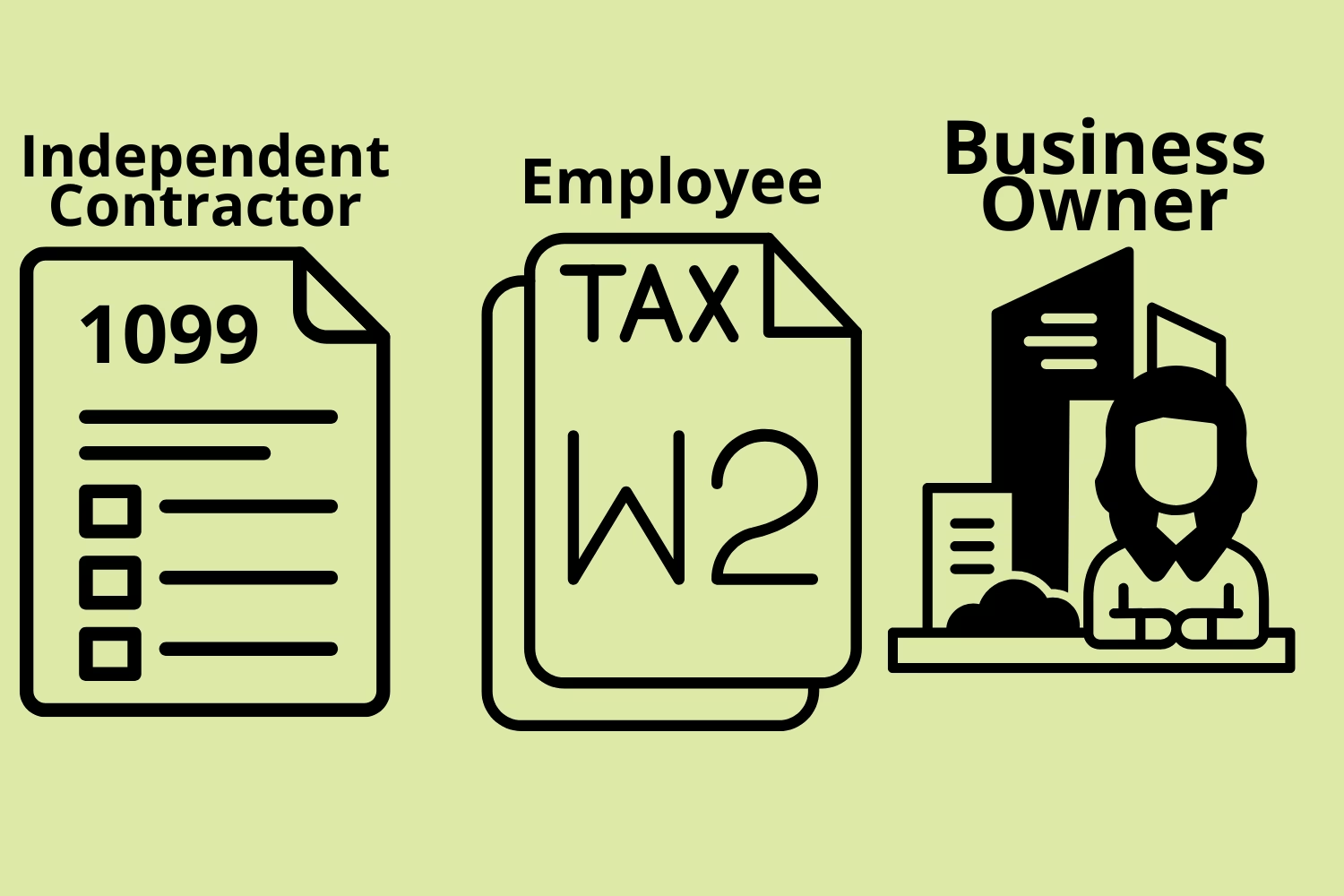
First, a quick note on how you’re classified for taxes because it changes what you can deduct. If you teach at studios owned by others, you’re either an employee or an independent contractor. Employees receive a W-2 form and independent contractors receive 1099-NEC forms. As an independent contractor, you file Schedule C with Form 1040 and can deduct ordinary and necessary business expenses, though you’ll pay self-employment tax.
If you own your studio, you might operate as a sole proprietor, LLC, S-corporation, or C-corporation. Each structure has different tax implications. Working with an accountant who understands the fitness industry helps you choose the structure that optimizes your tax situation.
Tax Deductions Yoga and Pilates Studio Owners Should Know
Studio Space and Rent Deductions
Your workspace is likely your largest expense and fully deductible. If you rent commercial space, your entire monthly rent, utilities, property insurance, security fees, and cleaning services count as business expenses.
Teaching from Home or Online
If you bring clients to your home or teach online, the home office deduction can provide significant savings. In order to deduct expenses from your home workspace, you must meet specific requirements.

For example:
- You need a dedicated space used regularly and exclusively for business.
- You must be the business owner, not the employee.
- The home must be your principal place of business.
There are two options for calculating your home office expense deductions:
- The simplified method has a rate of $5 a square foot for business use (maximum deduction is $1,500).
- The regular method has you calculate the percentage of your home used for business and apply it to your mortgage, utilities, insurance, and maintenance.
Yoga and Pilates Equipment Deductions
Everything you use to deliver quality instruction qualifies as deductible, including:
- Yoga mats
- Bolsters
- Blocks
- Reformer machines
- Weights
- Resistance bands
- Sound systems
- Mirrors
- Essential oils
The Section 179 deduction allows you to deduct the full cost of qualifying equipment purchased during the tax year, up to 2.5 million dollars, particularly valuable for large investments like reformers or new flooring.

Professional Development and Certification
The wellness industry values continuous learning, and the IRS recognizes professional development as legitimate business expenses. Deduct yoga teacher training programs, Pilates certifications, continuing education workshops, industry conferences, professional membership dues, and related books or online courses. Travel expenses for professional development (airfare, hotels, ground transportation, and meals) may also be deductible.
Yoga Retreats & Travel
To deduct travel to a retreat, the primary purpose of the trip must be business. So, if you spend 5 days teaching and 2 days sightseeing, you can generally deduct the business-related airfare, the 5 days of lodging, the cost of the venue rental, guest instructor fees, marketing, and 50% of the business meals.
Marketing and Studio Software Deductions
Getting clients through your door requires marketing investment, and these costs are deductible: website hosting and design, email marketing platforms, social media advertising, print materials, photography, and SEO services.
Studio management software is essential for modern wellness businesses. Platforms like OfferingTree provide comprehensive financial tracking and reporting that gives you visibility into your business finances throughout the year. While OfferingTree doesn’t prepare your taxes, it helps you track income from various sources and generate detailed financial reports, making tax preparation much less stressful.
Music Licensing Nuance
While software subscriptions for your businesses are generally deductible, music streaming comes with a nuance.
Business Software: Your subscriptions for business software like OfferingTree and Zoom are deductible.

Personal Music Account: You cannot deduct a personal Spotify or Apple Music subscription from your business expenses as these services are licensed for personal use only. According to BMI, “Under federal copyright law, when copyrighted music is performed in any establishment… the business owner must obtain permission…” Because personal accounts don’t include the public performance permission, the IRS views them as a personal expense, not a business one. Instead, check out royalty-free music services (like ZENMix, DJ Taz, or Epidemic Sound) that include the license in the subscription price.
Insurance and Professional Services
All business insurance is tax-deductible: general liability, professional liability, property insurance, and workers’ compensation. Professional services are also fully deductible, including fees paid to accountants, lawyers, business coaches, website designers, and virtual assistants.
Vehicle Expenses
If you drive between studio locations, visit clients for private sessions, or pick up supplies, deduct these expenses using either the standard mileage rate (70 cents per mile for 2025) or actual expenses like gas, maintenance, and insurance. Business-related parking fees and tolls are deductible regardless of which method you choose.
Additional Deductible Expenses
Other common deductions include internet and phone services (calculate the business-use percentage), business meals (50% deductible when discussing business), music streaming subscriptions used exclusively for classes, and if you employ staff, their wages, payroll taxes, benefits, and retirement contributions.
What You Cannot Deduct
Understanding what doesn’t qualify is equally important.
Clothing: The IRS is notoriously strict about clothing. To qualify as a deduction, personal clothing must be required as a condition of your employment and not suitable for everyday wear.
Gym Memberships: You cannot deduct gym memberships unless it is prescribed by a healthcare professional to treat a condition.
Other Common Expenses That Don’t Count: Personal meals, commuting to your primary studio location, fines and penalties, or personal grooming costs.
Best Practices for Maximizing Your Yoga or Pilates Business Deductions
Keep meticulous records—save receipts, invoices, and documentation for all business expenses. Digital copies are acceptable and often preferable. Separate business and personal finances by opening dedicated business bank accounts and credit cards. Track mileage religiously using apps like MileIQ.
However, tracking your spending is only half of the equation. To truly master your studio’s finances, you must have a plan for the money you keep. As Nina Israel, a boutique fitness accounting expert, explains:
“The biggest tax challenge I see for wellness professionals and studio owners isn’t missed deductions—it’s not setting aside cash for tax obligations. A simple, intentional cash-flow system (even a modified Profit First approach) can help you reserve money consistently, reduce anxiety, and feel confident about your finances long before tax time.”
By adopting this mindset, you ensure that when it comes time to make quarterly estimated tax payments, the money is already there, waiting in a dedicated account. Most importantly, work with a qualified accountant who understands wellness businesses. Their fee is tax-deductible, and the money they save you typically exceeds their cost.
Moving Forward with Confidence
Tax deductions aren’t exciting but the money they put back in your pocket is. Every legitimate deduction you claim means more money available for growth, better equipment, professional development, or personal financial security. Start by reviewing your current expense tracking system, and consider working with a tax professional who can provide guidance beyond tax preparation to help with pricing strategies, profit optimization, and long-term financial planning.
To implement a system like the one Nina Israel suggests, you need clear visibility into your numbers. OfferingTree makes this simple by providing the financial reports you need to see exactly what’s coming in, so you can set aside your tax and profit percentages with total confidence.
Start by reviewing your current expense tracking, and consider working with a tax professional who can help you move from simply “surviving tax season” to optimizing your studio for long-term profit.
New to teaching and not even sure where to start? Check out our beginner’s guide to filing taxes as a yoga or fitness teacher.
Resources
- IRS Publication 334: Tax Guide for Small Business
- IRS Credits and Deductions for Businesses
- IRS Guide to Business Expense Resources
Important Disclaimer: This article is provided for educational and informational purposes only and does not constitute professional tax, legal, or financial advice. Tax laws are complex, subject to change, and vary significantly based on individual circumstances, business structure, location, and other factors. OfferingTree is not a CPA firm, tax advisor, or legal service provider, and we do not provide tax, legal, or financial advice. We assume no liability for any actions taken based on the information provided in this article. We strongly recommend working with qualified professionals to ensure compliance with all applicable tax laws and regulations.
Before making any tax-related decisions or claiming deductions, you should consult with a qualified tax professional, certified public accountant (CPA), enrolled agent, or tax attorney who is familiar with the laws in your jurisdiction and can provide personalized advice based on your unique circumstances. Only a licensed professional can provide guidance tailored to your specific tax situation.
Frequently Asked Questions:
Tax Deductions for Yoga and Pilates Business Owners
Can yoga and Pilates teachers deduct teacher training on their taxes?
Yes. Yoga teacher training programs, Pilates certifications, continuing education workshops, industry conferences, professional membership dues, and related books or courses all can qualify. Travel expenses for professional development like airfare, hotels, ground transportation, and meals may also be deductible.
Is yoga or Pilates studio rent tax-deductible?
Yes. If you rent commercial space, your monthly rent, utilities, property insurance, security fees, and cleaning services all count as business expenses. If you teach from home, you may qualify for the home office deduction, either the simplified method or the regular method based on the percentage of your home used for business.
Can I deduct my music streaming subscription for classes?
Personal Spotify or Apple Music subscriptions aren’t licensed for public performance, so the IRS considers them a personal expense. Instead, look into royalty-free music services like ZENMix, DJ Taz, or Epidemic Sound that include the proper licensing.
What is the Section 179 deduction for studio equipment?
Section 179 lets you deduct the full cost of qualifying equipment in the year you buy it rather than depreciating it over time. This is particularly valuable for large purchases like Pilates reformers or new flooring.
What can't I deduct as a yoga or Pilates business owner?
Personal clothing (even if you only wear it to teach), gym memberships (unless prescribed by a healthcare professional), personal meals, your commute to your primary studio location, fines, and penalties, are just some of the things you can’t deduct..
See OfferingTree in action
Scheduling, payments, your website and email marketing in one place, built for wellness businesses.
Start a free trialSee OfferingTree in action
One platform for scheduling, payments, your website and email marketing - built for wellness businesses, priced for them too.
Start a free trialMore from the Blog

Best Pilates software with a built-in website
Most Pilates software doesn't include a website. See which of 7 platforms bundle one, which charge extra, and how much it costs.
.jpg)
Top dance studio email marketing software
Learn about what dance studios need to specifically look for depending on what kinds of classes they facilitate.

Best email marketing software for Pilates studios compared
Pilates studios can leverage email marketing to prevent churn and grow their client base. Compare top software here.